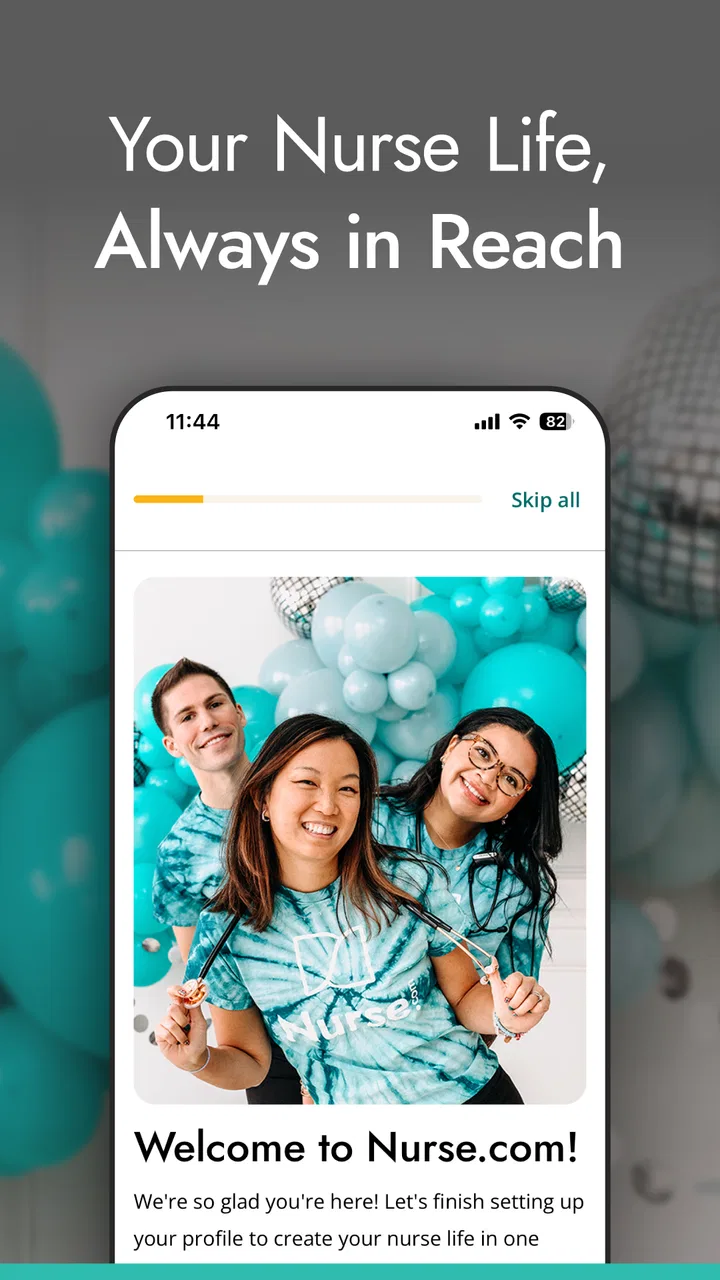
Nurse.com
- 4.2
- Rating
- 10.00K
- Installs
- Free
- Price

 Analysis by App-foxy
When I opened Nurse.com, I approached it as a working nurse might: not looking for entertainment, but trying to turn a spare moment into something useful for my practice. The app comes from Relias Mobile and sits in the medical category, with a clear focus on nursing education and professional support. Its store summary, “Where Nurses Thrive,” points toward that purpose, while the shorter store description simply identifies it as Nurse.com.
My first impression was that this is best understood as a companion to a nurse’s ongoing learning routine rather than a replacement for clinical judgment, hospital training, or a reference text. That distinction matters. A nurse may use it to support development, revisit a subject, or find material during a quiet part of a shift, but it should not be treated as an authority for making an urgent patient-care decision.
Nurse.com is free to download, although the app includes optional purchases ranging from twenty-nine cents to one hundred fifty dollars per item. That makes the initial decision easy: you can try the app without paying upfront, then decide whether its deeper content fits your needs. It is rated for Teen users, so younger readers and families should keep that age classification in mind even though the audience is clearly centered on nursing professionals and learners.
You May Also Like

 Pandora - Music & Podcasts
Pandora’s Music Is Easy to Start, but Harder to Recover
Pandora’s strength is its low-effort path from a seed to a station. Its weak spot is how much confidence it asks you to place in connection, setup, and quiet recovery.

 8 Ball Pool
 Is Built on Rivalries, Rematches, and Routine
A close look at the rivalries, rematches, shared routines, and unanswered safety questions that turn a quick pool match into a persistent mobile community.

 Samsung Music
’s Quiet Strength Is Playing What You Already Own
Its reach comes less from spectacle than from dependable access to a personal library. That simplicity is both the app’s strongest retention engine and its ceiling.

 AccuWeather: Weather Radar
AccuWeather Review: A Quick, Clear Forecast for Everyday Decisions
For everyday plans, the best forecast is the one you can understand quickly. AccuWeather makes rain timing, radar, and local conditions easy to act on, with a few trade-offs.

 Hill Climb Racing
Why Hill Climb Racing Still Turns Crashes Into One More Run
A tiny car, a bumpy hill and one more upgrade: Hill Climb Racing keeps resurfacing because its simple chaos makes every near-miss feel personal.

 AliExpress - Shopping App
AliExpress Makes Global Shopping Feel Personal, but Shoppers Bear the Risk
AliExpress turns a global marketplace into a pocket-sized discovery engine. Its reach is useful, its shopping loop compelling, and its trade-offs easy to miss.
More From Our News Desk
View All News


Following a nurse’s workflow from a spare moment to a useful outcome
I’ll look at how Nurse.com can fit into a nurse’s day, from choosing a useful moment to study through deciding what to do with what I’ve learned. The key is to treat that time as a small, purposeful step in a larger professional routine, which makes the next question practical: how do I turn a spare moment into an outcome worth keeping?
Starting with a specific learning need
The most realistic way to use this app is to begin with a defined question. For example, I might finish a shift and realize that I want to strengthen my understanding of a topic I encountered, or I might be preparing for a professional development task and need a more organized way to study. Starting with that goal prevents the app from becoming another place where I scroll without a plan.
This is where Nurse.com has a practical advantage over a general web search. Search engines can return clinical articles, discussion pages, advertisements, and material written for audiences with very different levels of training. A nursing-focused app gives the learning process a more relevant starting point. It narrows the context to the profession instead of asking me to sort through unrelated results.
That focus does not mean every item will suit every nurse. A student, a newly qualified nurse, and an experienced specialist may approach the same subject differently. I would therefore begin by identifying whether I need a quick refresher, structured education, or broader career-oriented material. The clearer that starting condition is, the easier it becomes to judge whether the app is helping.
One useful habit is to keep a short list of topics before opening the app. After a demanding shift, memory is unreliable and attention is limited. Writing down two or three questions while they are fresh gives the session a purpose. It also makes it easier to stop when the useful work is finished instead of spending the entire break browsing.
Moving through the app instead of treating it like a textbook
In practice, I would use Nurse.com in short stages. First, I would identify the relevant subject. Next, I would work through the material at a pace that matches my available time. Finally, I would note what still needs checking elsewhere. That workflow is more realistic for nursing than expecting one app to provide every answer, every policy, and every local procedure.
The app is particularly suitable for fragmented schedules. A nurse may have ten minutes before a shift, a longer commute as a passenger, or a quiet period at home. Those situations call for different levels of concentration. A short session can help me orient myself around a topic, while a longer session gives me room to read carefully and think about how the subject relates to practice.
I would not use the app while actively responsible for a patient if doing so distracts from care. That sounds obvious, but it is an important boundary. Educational content belongs in a safe learning moment, not in the middle of medication administration, an emergency, or a handoff. The app can support preparation and reflection; it cannot replace the immediate resources required by a clinical situation.
A second practical tip is to separate learning from documentation. If I come across an idea that may influence my practice, I would write a brief personal note after finishing the session rather than trying to capture everything while reading. That helps distinguish what the app presented from what I still need to verify against employer guidance, local policy, or an approved clinical reference.
Handling the handoff from app content to real practice
The most important handoff is the one between independent learning and the workplace. Educational material may give me a stronger foundation, but my employer’s procedures, scope of practice, and local standards still govern what I do. I would treat Nurse.com as one step in the chain: it can help me form better questions and prepare for conversations with educators or supervisors.
This is also where the app compares favorably with casual social media groups. Online communities can be useful for hearing how other nurses think, but advice there may be inconsistent, incomplete, or tied to a particular setting. A dedicated nursing resource feels more appropriate when I want to study deliberately rather than collect quick opinions.
At the same time, a conventional reference book may be better when I need a stable, searchable source that I already know well. Printed or institutional references can be easier to consult under pressure, especially when a workplace has approved a particular manual. Nurse.com makes more sense for ongoing education and professional development than for replacing a trusted bedside reference.
There is another handoff that matters for students: the move from app-based learning to instructor feedback. I would use the app to prepare for class or clinical discussion, then bring confusing points to a tutor. Reading independently can reveal gaps, but it cannot always show whether I have interpreted a concept correctly. The strongest result comes when the app supports, rather than isolates, formal education.
What the workflow produces when it works well
The outcome I would want is not simply that I spent time inside the app. A successful session should leave me with a clearer understanding of a topic, a better question for a mentor, or a more organized plan for continued study. That is a modest result, but it is realistic and valuable in nursing, where small improvements in preparation can accumulate over time.
For example, imagine a nurse who notices a recurring knowledge gap after several shifts. Instead of searching randomly each evening, the nurse can use a single learning space to return to the subject, work through relevant material, and identify which parts remain uncertain. The final outcome is not an instant qualification; it is a more deliberate learning loop that can be continued across several sessions.
I also see value for nurses returning to study after time away. The app can provide a less intimidating first step than opening a large textbook or trying to plan an entire course immediately. Starting with one manageable topic may make it easier to rebuild confidence. However, that confidence should remain grounded in current workplace expectations and supervised practice where appropriate.
The audience size gives some context without deciding the app’s quality by itself. Nurse.com has passed ten thousand installs, with an average rating of four point two from around one hundred ratings and twenty-five written reviews. Those figures suggest that many users find it worthwhile, but they are not a substitute for checking whether the content and learning style match my own goals.
Where the flow becomes less convenient
The first friction point is the difference between downloading an app for free and using every part of its offering. Optional purchases can change the experience depending on what a user wants to access. I would be comfortable installing it to explore the available learning path, but I would not assume that every desired resource is included without cost. Anyone studying on a tight budget should examine purchase prompts carefully before committing.
The wide purchase range also means the app may serve different kinds of users, from someone casually exploring nursing education to someone looking for substantial professional material. That flexibility can be useful, but it can also make the value harder to judge at the beginning. I would first identify the exact educational outcome I need, then decide whether a paid item is justified by that outcome.
A second limitation is that a mobile screen is not always the best place for serious study. Long reading sessions can feel tiring, and a phone encourages interruptions. If I need to compare several concepts, take detailed notes, or study for an important assessment, a larger screen or printed material may be more comfortable. The app works best when its convenience outweighs the limitations of mobile reading.
The third issue is the risk of confusing general education with local instruction. Nursing practice varies by institution, role, and jurisdiction. Even excellent educational material cannot automatically tell me how my own workplace expects a task to be performed. I would always complete the handoff by checking the relevant local source before applying anything in practice.
There is also a personal discipline problem. A professional app can look productive while still encouraging passive consumption. Reading one item after another is not the same as learning. I would pause after each session and ask myself what I can explain, what I still do not understand, and what action follows. If I cannot answer those questions, I probably need a different study method rather than more scrolling.
Who will get the most from it
I think Nurse.com is a good fit for nurses who want a focused mobile resource for continuing education, revision, and professional reflection. It may also suit students who need an additional study companion, provided they use it alongside their course materials and instructor guidance. The free entry point makes it reasonable to test the experience before considering any optional spending.
It is less suitable for someone seeking immediate emergency guidance, a complete local policy manual, or a single definitive source for every clinical question. It is also not the best choice for a learner who prefers deep, uninterrupted textbook study and dislikes reading on a phone. In those cases, an institutional reference, a formal course, or a specialist publication may be the better tool.
My advice would be to use it with a simple three-part routine: choose one question, study with a time limit, and verify any practice-changing conclusion through an appropriate professional source. That routine turns the app from a passive content library into a controlled part of a broader learning process.
Compatibility, upkeep, and the final decision
The current version is 3.3.10, and the app supports devices running Android 7.0 or later. That gives it a fairly accessible technical starting point for Android users, although anyone using an older device should check compatibility before planning around it. The release date was January 30, 2018, so the app has had time to establish itself, while the current version shows that it has continued to receive version updates.
Overall, I see Nurse.com as a practical nursing education companion rather than an all-purpose clinical tool. Its strongest quality is the way it can fit into a busy professional’s learning routine: a focused starting point, a short study session, and a handoff to workplace guidance or instructor feedback. Its weakest points are the uncertainty that optional purchases can introduce, the limits of phone-based study, and the need to verify educational information before applying it locally.
I would recommend trying it if you want a nursing-specific place to support regular learning and you are willing to use it thoughtfully. I would skip it as a primary resource if your real need is urgent bedside decision support or a detailed institutional manual. Used within those boundaries, it can turn scattered curiosity after a shift into a more organized path toward understanding. That is not a substitute for experience, supervision, or approved clinical guidance, but it is a sensible role for Nurse.com in a nurse’s wider professional workflow.
FAQs for Nurse.com
01What is Nurse.com and who is it designed for?
Nurse.com is an educational and professional resource platform created primarily for nurses and nursing students. It typically provides continuing education courses, clinical information, career guidance, articles, exam-preparation resources, and professional development content. The exact features available may depend on your subscription, location, account type, and whether you access the service through its website or mobile experience.
02Can Nurse.com help me earn continuing education credits?
Yes, Nurse.com offers continuing education opportunities for nurses, including courses and learning activities that may provide contact hours or professional development credits. Before enrolling, check the course description, accreditation details, eligible license types, and completion requirements. Credit acceptance can vary by state, country, employer, and licensing board, so users should confirm local requirements before relying on a course for license renewal.
03Is Nurse.com free to use, or does it require a subscription?
Nurse.com may provide some articles, resources, or introductory materials at no cost, while other courses, study tools, and premium features can require payment or a subscription. Pricing and available plans may change, and access can differ between individual users and organizations. Review the current plan information carefully, including renewal terms, included content, cancellation rules, and whether a trial converts into a paid subscription.
04Can Nurse.com replace nursing school, clinical training, or professional advice?
No. Nurse.com is intended to supplement formal nursing education and professional development, not replace an accredited nursing program, supervised clinical practice, workplace policies, or guidance from qualified healthcare professionals. Educational articles and courses should be used as learning resources rather than as personalized medical advice. Always follow current institutional protocols, consult appropriate supervisors, and verify important clinical information with authoritative sources.
05What should I check before downloading or creating a Nurse.com account?
Before downloading or signing up, check that your device meets the app’s operating-system requirements and that the service is available in your region. Review the requested permissions, privacy policy, account and subscription terms, and whether course progress synchronizes across devices. It is also useful to confirm that the content matches your nursing specialty, licensing jurisdiction, and professional goals before committing to a paid plan.
Pros
- Practical nursing courses support ongoing professional development.
- Job listings help nurses explore new career opportunities.
- Skills and certification content is useful for career planning.
- Mobile access makes learning convenient during spare moments.
- Resources cover clinical
- career
- and workplace topics in one app.
Cons
- Many premium courses require a paid subscription or separate purchase.
- Some content may be more useful to U.S.-based nurses than others.
- The large amount of material can make navigation feel overwhelming.
- Job availability and relevance depend heavily on your location.
- Advanced features may require creating an account and sharing personal details.

Nurse.com
Gallery